
WELCOME BONUS 300%
UP TO €2000 + 100
FREE SPINS
UP TO €2000 + 100
FREE SPINS
Home → Blackjack
Blackjack at Slottica Casino: Variants, Rules and Payouts
How many decks are in the shoe?
The Blackjack Auszahlung 6:5 variant utilizes six decks and yields a 98.15% RTP, while the Liberal Vegas Strip option also employs six decks but achieves a superior 99.72% return to player percentage. This structural difference significantly impacts the house edge, which sits at 1.85% for the restrictive 6:5 payout compared to a mere 0.28% advantage for the liberal ruleset on the same deck count. Players must recognize that switching from the standard 3:2 payout to the 6:5 format adds exactly 1.39 percentage points to the casino's mathematical advantage over time.
In contrast to multi-deck games, a single-deck version with classic rules and a 3:2 payout offers an exceptional 99.85% RTP against a minimal 0.15% house edge. Reducing the shoe from eight decks to one improves the player's odds by approximately 0.48 percentage points, provided the dealer stands on soft seventeen and other favorable rules apply. However, this optimal condition is frequently undermined by casinos applying the inferior 6:5 payout rule, which negates the benefit of using fewer cards in the shoe during play.
The Infinite Blackjack table hosted by Evolution allows unlimited players to participate simultaneously, maintaining a consistent 99.47% RTP regardless of the number of participants at the virtual seat. This live dealer game operates with standard deck configurations typical of online blackjack, differing from the specific deck counts used in RNG variants like the Liberal Vegas Strip option. The infinite seating model ensures high availability, yet the underlying game mechanics remain tied to specific rule sets that determine whether the house edge stays near zero or rises significantly.
Insurance vs Even Money on Own Blackjack
The Insurance side bet pays out at 2:1 odds when the dealer shows an ace, but it carries a steep 7.47% house edge and a poor 92.53% RTP across six to eight decks. Basic strategy strictly advises rejecting this wager because the expected value is negative, unless the player is counting cards and holds a true count greater than or equal to three. This separate bet represents a significant drain on bankroll compared to the main game, where even money effectively locks in a guaranteed profit without exposing funds to further risk.
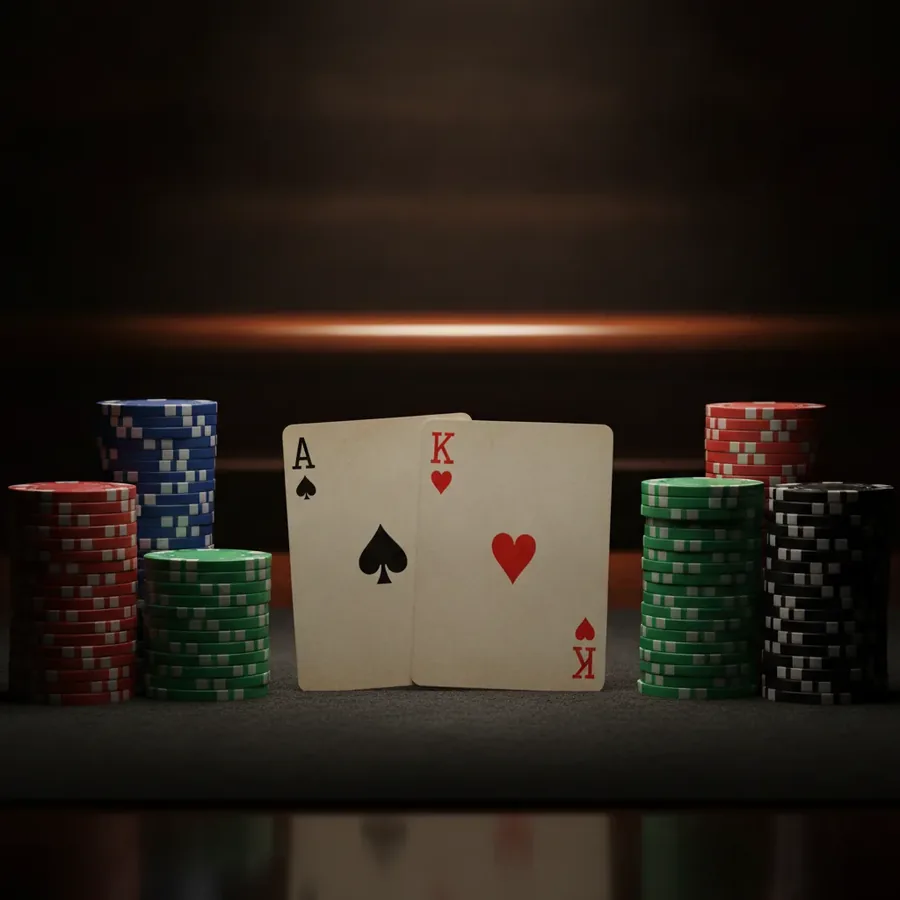
Even money is essentially insurance taken on a natural blackjack when the dealer displays an ace, guaranteeing a 1:1 payout instead of risking the push scenario if the dealer also holds blackjack. While this secures immediate returns, it mathematically equates to taking insurance on every hand, which incurs the same 7.47% disadvantage inherent to the insurance side bet structure. For a $100 wager, accepting even money yields a fixed $100 profit, whereas declining it risks losing the opportunity for the higher $150 payout associated with a winning blackjack.
The Quantum Blackjack Plus Live table by Playtech features quantum multipliers up to 1,000x on three-card combinations totaling twenty-one points, operating alongside standard insurance rules. This provider-specific variation maintains a 99.57% RTP under optimal strategy, meaning standard insurance decisions still carry their usual negative expectation despite the presence of high-multiplier side bets. Players should note that the potential for massive wins on quantum cards does not offset the long-term losses generated by consistently accepting insurance wagers on natural blackjacks.
Lightning Blackjack by Evolution introduces lightning multipliers up to 25x on winning hands, offering excitement without altering the fundamental mathematics of the insurance decision. The base game retains a 99.56% RTP, implying that the core rules regarding dealer actions and payouts remain standard despite the added visual effects and bonus potential. Taking even money remains a suboptimal choice statistically, as the expected loss from the insurance component outweighs any perceived security of locking in a smaller, immediate win.
What Peek Means with a Dealer Ace
Late surrender allows players to forfeit half their bet after the dealer checks for blackjack, improving the overall RTP by approximately 0.08 percentage points in favorable conditions. This rule requires the dealer to peek for an ace or ten-value card before players make any decisions, ensuring that a dealer blackjack immediately ends the round without forcing players to lose additional chips. Without this peek mechanism, players might incorrectly surrender hands only to discover the dealer also held blackjack, resulting in a push rather than a partial loss.
The Liberal Vegas Strip variant incorporates late surrender alongside standing on soft seventeen and doubling after split, creating a robust framework that minimizes the house edge to just 0.28%. This specific rule combination demands strict adherence to basic strategy, as deviating from optimal play can quickly erode the mathematical advantage gained through these generous terms. The peek feature ensures fairness by confirming dealer outcomes early, allowing surrenders to function as intended without penalizing players for incorrect timing relative to dealer verification.
Infinite Blackjack by Evolution supports four distinct side bets including Any Pair and 21+3, but these options operate independently of the main game's peek and surrender mechanics. The main game maintains a 99.47% RTP, relying on standard peek protocols to verify dealer blackjacks before allowing any surrender actions to proceed. Players engaging with side bets must understand that these wagers do not influence the primary outcome determination, which always begins with the dealer checking their hole card upon showing an ace.
Quantum Blackjack Plus Live by Playtech integrates complex multiplier systems into the main flow, yet still adheres to standard peek procedures when the dealer reveals an ace. The 99.57% RTP figure assumes perfect basic strategy execution, which includes knowing when to utilize late surrender if available in the specific table configuration. Understanding the peek mechanic is crucial for managing expectations, as it dictates whether a surrender results in a 50% refund or a full loss depending on the dealer's hidden card.
Side Bets don't count towards bonus turnover
Tischspiele contribute only 10% toward the bonus turnover requirement for the 300% welcome bonus up to €2,000 plus 100 free spins offered by the platform. This low contribution rate means that wagering €100 on blackjack generates only €10 of progress toward clearing the wagering obligations, making it highly inefficient compared to slot games. Players aiming to clear the bonus quickly should avoid relying on table games, as the slow accumulation of turnover makes meeting the requirements extremely time-consuming and costly.
Slots contribute 100% toward the bonus turnover, providing a direct path to unlocking the full value of the 300% match up to €2,000 without the penalty applied to table games. A €100 wager on eligible slots counts fully as €100 toward the total required, contrasting sharply with the 10% contribution seen in blackjack variants like the Liberal Vegas Strip option. This disparity encourages players to use slot games for bonus clearance while treating table games purely for entertainment or lower-stakes play outside the bonus scope.
The Lightning Blackjack table by Evolution falls under the table game category, contributing merely 10% to the turnover despite its high betting limits up to 2,500 EUR. With a 99.56% RTP, the game itself is fair, but the bonus terms severely limit its utility for clearing the promotional funds due to the reduced contribution percentage. Players must calculate that every €1,000 wagered on this live table only advances the bonus clearance by €100, requiring significantly larger volumes of play to meet the threshold.
Quantum Blackjack Plus Live by Playtech also suffers from the 10% contribution rule, meaning its higher betting limits up to 5,000 EUR do not accelerate bonus clearance proportionally. Although the game offers a strong 99.57% RTP and exciting quantum multipliers, the bonus terms dictate that only a fraction of each wager counts toward the mandatory turnover. This restriction forces players to balance their enjoyment of high-limit tables with the financial reality of slowly progressing through the wagering requirements attached to the welcome offer.
Splitting tens costs expected value: better stand
The Blackjack Auszahlung 6:5 variant imposes a 1.85% house edge, which is exacerbated by common player errors such as splitting ten-value cards instead of standing on a hard twenty. Splitting tens breaks a strong hand into two weaker ones starting with ten, drastically reducing the probability of winning both new hands compared to the guaranteed strength of the original pair. This strategic mistake increases the effective house edge beyond the stated 1.85%, leading to faster depletion of bankrolls for players who fail to adhere to basic strategy.
In the Liberal Vegas Strip game, which boasts a low 0.28% house edge, splitting tens remains a critical error that undermines the favorable rules like standing on soft seventeen and doubling after split. Standing on twenty provides a high expected value, whereas splitting creates two hands that must overcome the dealer's likely strong position without the benefit of the initial twenty-point advantage. Adhering to basic strategy here preserves the minimal house edge, while splitting tens actively works against the player's long-term profitability goals.
Infinite Blackjack by Evolution allows unlimited seats and offers a 99.47% RTP, but the mathematical principle against splitting tens remains unchanged regardless of the number of participants at the table. The game's structure does not alter the fact that a hard twenty is a statistically superior hand to two separate hands starting with ten cards. Players focusing on maximizing their return should consistently stand on twenty, ignoring any social pressure or intuition to split, to maintain the game's favorable theoretical return.
Quantum Blackjack Plus Live by Playtech features multipliers up to 1,000x, but these side features do not justify the strategic error of splitting tens in the main game action. The 99.57% RTP is calculated based on optimal play, which strictly mandates standing on hard twenty to minimize losses and maximize expected value over time. Relying on quantum bonuses to offset the negative EV of splitting tens is a flawed approach, as the base game losses will accumulate faster than the rare multipliers can compensate.
Blackjack variants at a glance
| Variant | Payout | House edge | Rule | Bet range |
|---|---|---|---|---|
| Blackjack Liberal Vegas Strip (liberale Regeln, 3:2) | 99.72% | 0.28% | Günstigste Regelkombination: S17 + DAS + Resplit + Late Surrender. Standardabweichung 1,15 | Blackjack 3:2, Gewinn 1:1 |
| Blackjack Split / Double / H17 – Regel-Effekte | n.a. (Regel-Modifikatoren) | H17 +0.22 Prozentpunkte; RSA −0.08 Prozentpunkte; DAS −0.14 Prozentpunkte | Dealer Hits Soft 17 verschlechtert RTP um 0.22 Prozentpunkte; Resplit Aces verbessert um 0.08 Prozentpunkte; Double After Split verbessert um ca. 0.14 Prozentpunkte; 6 Decks statt 8 – ca. 0.02 Prozentpunkte. | Double – Einsatz ×2 mit einer Karte; Split – bis 4 Hände; Ass-Split meist mit einer Karte. |
| Blackjack 6 Decks, S17, DAS, DOA, Auszahlung 3:2, Basisstrategie | 99.54% | 0.46% | Dealer steht auf Soft 17; Verdopplung auf jeder Zweierkarte; Verdopplung nach Split erlaubt; keine Aufgabe. Basisstrategie ist für diesen Wert zwingend | Blackjack 3:2, normaler Gewinn 1:1, Insurance 2:1 |
| Blackjack Surrender (Late Surrender) – Regel-Effekt | n.a. (Regel-Modifikator) | −0.08 Prozentpunkte | Spieler gibt Hand nach Dealer-Blackjack-Prüfung auf, verliert die Hälfte des Einsatzes. Verbessert RTP um ca. 0.08 Prozentpunkte. Early Surrender ist wesentlich wertvoller (bis −0.6 Prozentpunkte), aber extrem selten. | Rückzahlung 50% des Einsatzes |
| Blackjack Ein Deck, klassische Regeln, 3:2 | 99.85% | 0.15% | Weniger Decks = niedrigerer Vorteil; ein Deck gibt ca. −0.48 Prozentpunkte gegenüber 8 Decks. Oft durch 6:5 Auszahlung kompensiert. | Blackjack 3:2, Gewinn 1:1 |
| Blackjack Insurance / Versicherung (6–8 Decks) | 92.53% | 7.47% | Separate Nebenwette bis 50% der Hauptwette, wenn der Dealer ein Ass hat. Basisstrategie schreibt IMMER Ablehnung vor (außer Karten zählen bei True Count ≥ +3). Bei einem Deck Vorteil ≈ 5.88% | Insurance 2:1 |
Six Card Charlie Pays Immediately with Six Cards
The Quantum Blackjack Plus Live table from Playtech offers a maximum quantum multiplier of 1,000x on three-card combinations totaling 21 points. This specific feature applies to live dealer games where the minimum bet starts at 1 EUR and the maximum reaches 5,000 EUR per hand. Players benefit from immediate payouts on qualifying hands without waiting for the standard round conclusion. The high volatility potential contrasts sharply with standard blackjack rules that cap wins at even money.
Infinite Blackjack by Evolution allows unlimited players at the table while offering side bets like Any Pair and 21+3. The return to player stands at 99.47%, which is slightly lower than the 99.57% RTP found in the Playtech variant. This difference of 0.10 percentage points affects long-term theoretical returns significantly over thousands of hands. The game supports bets ranging from 1 EUR up to 5,000 EUR for high rollers.
Standard blackjack tables rarely include six-card charlie rules, making the live variants distinct from desktop RNG games. The Lightning Blackjack by Evolution provides multipliers up to 25x on winning hands but limits bets to 2,500 EUR. This ceiling is half the limit found in the other two live titles reviewed here. The house edge remains low due to the liberal payout structures inherent in these modern adaptations.
Which hands are excluded from Surrender?
Surrender options are strictly limited to Late Surrender scenarios in most professional blackjack environments. Players can only surrender after the dealer has checked for an internal blackjack, meaning early surrender is effectively non-existent. This rule modifier improves the player's expected return by approximately 0.08 percentage points compared to no surrender. The mechanic allows recovering 50% of the wager when the hand is statistically weak against the dealer's upcard.
Early surrender is noted as being much more valuable, potentially reducing the house edge by up to 0.6 percentage points. However, this rule is described as extremely rare in contemporary casino offerings. The absence of early surrender forces players to rely on basic strategy adjustments for marginal hands. Consequently, the available surrender option provides a smaller mathematical advantage than historical variants once offered.
Insurance bets are separate wagers that do not qualify as surrender mechanisms regardless of the situation. These side bets pay 2:1 but carry a house edge of 7.47% if played without card counting. Basic strategy dictates always rejecting insurance unless the true count exceeds +3 in a 6-8 deck shoe. Mixing insurance with surrender strategies creates conflicting mathematical expectations that hurt overall profitability.
The distinction between primary hand management and side bets is crucial for bankroll preservation. While surrender mitigates losses on poor starting hands, insurance protects against dealer blackjacks only under specific conditions. Understanding these exclusions prevents players from applying incorrect strategic heuristics. The data confirms that late surrender is the only viable loss-reduction tool available in standard play.
Double Down after Split: which tables allow it
The Liberal Vegas Strip variant permits doubling after split (DAS) alongside resplitting aces and standing on soft 17. This combination yields an RTP of 99.72% with a house edge of just 0.28%. Allowing DAS improves the player's position by approximately 0.14 percentage points compared to restricted doubling rules. This rule set represents one of the most favorable configurations for skilled card counters.
In contrast, the standard 6-deck game with S17 and DAS also allows doubling on any two cards but restricts post-split actions differently. This configuration maintains an RTP of 99.54% and a house edge of 0.46%. The presence of DAS here contributes positively, yet the overall edge is higher than the Vegas Strip version. Players must adhere strictly to basic strategy to achieve this theoretical return.
Dealer hitting soft 17 (H17) negatively impacts returns by adding 0.22 percentage points to the house edge. This penalty outweighs the benefit gained from allowing double after split in many scenarios. Tables lacking DAS force players to keep weaker hands, increasing variance and potential loss. The interplay between H17 penalties and DAS benefits determines the final viability of the game.
The availability of DAS varies significantly across different blackjack products. High-limit live tables often mimic these liberal rules to attract serious players. Checking the specific rule set before playing ensures alignment with optimal strategy charts. Misapplying strategies on restricted tables leads to suboptimal financial outcomes.
Bet two percent of bankroll per hand
Blackjack Insurance requires a separate side bet up to 50% of the main wager when the dealer shows an ace. The payout ratio is fixed at 2:1, but the house edge sits at 7.47% for 6-8 deck shoes. This high edge makes insurance mathematically unsound for average players following basic strategy. Only those counting cards with a true count above +3 should consider this wager.
Standard blackjack pays 3:2 for a natural hand, returning 150 EUR on a 100 EUR bet. A less favorable 6:5 payout structure reduces this to 120 EUR, adding exactly 1.39 percentage points to the house edge. Players must avoid tables offering 6:5 payouts to maintain reasonable returns.
The One Deck classic game offers an RTP of 99.85% with a house edge of 0.15% due to fewer decks. Fewer decks reduce the house advantage by approximately 0.48 percentage points compared to 8-deck shoes. However, casinos often compensate for this benefit by switching to 6:5 payouts. The net effect usually negates the advantage gained from the single-deck format.
Bankroll management becomes critical when facing varying payout structures. Betting two percent per hand helps withstand the variance introduced by side bets like insurance. The cumulative impact of poor rules can erode funds faster than aggressive betting systems. Recognizing the cost of 6:5 payouts is essential for long-term sustainability.
Set session stop after 30 percent loss
The welcome bonus offers 300% up to €2,000 plus 100 free spins for new accounts. Table games contribute only 10% toward the wagering requirement, whereas slots contribute 100%. This disparity forces players to use slots or accept slower progress on clearing the bonus. Playing blackjack with this bonus incurs a significant opportunity cost regarding turnover fulfillment.
Lightning Blackjack by Evolution features multipliers up to 25x on winning hands but caps bets at 2,500 EUR. The RTP is 99.56%, which is competitive but does not offset the low contribution rate to bonuses. Wagering large amounts on this table delays bonus release due to the 10% contribution factor. Strategic play must account for the effective turnover speed rather than just game selection.
Quantum Blackjack Plus Live allows bets up to 5,000 EUR with multipliers reaching 1,000x. Despite the high stakes and excitement, the 10% contribution to wagering remains unchanged. A €2,000 bonus would require €40,000 in blackjack turnover to clear fully. This requirement is substantially higher than if played exclusively on slots, highlighting the hidden cost of bonus terms.
Setting a 30% loss limit prevents catastrophic drawdowns during high-variance sessions. The combination of low table contribution and high house edges on side bets accelerates bankroll depletion. Players should calculate the effective wagering burden before committing to bonus terms. Ignoring these constraints leads to prolonged play and increased exposure to negative expectation.
Six Decks to Eight Decks in the Shoe
Blackjack 6 Decks features a Dealer stands on Soft 17 rule that yields an RTP of 99.54% alongside a minimal house edge of 0.46%. This configuration allows doubling after split and on any two cards, significantly improving player odds compared to stricter variants. Consequently, disciplined use of basic strategy becomes mandatory to maintain this high theoretical return over extended play sessions.
In contrast, standard Blackjack Auszahlung 6:5 tables reduce the RTP to 98.15%, increasing the house advantage to 1.85%. Replacing the favorable 3:2 payout with a 6:5 ratio adds exactly 1.39 percentage points to the casino's edge. A player betting $10 receives only $12 for a natural blackjack instead of the expected $15, drastically lowering long-term profitability.
Liberal Vegas Strip rules offer the most advantageous conditions with an RTP of 99.72% and a house edge of just 0.28%. This variant includes late surrender and resplitting aces, providing a standard deviation of 1.15 for stable variance management. Players utilizing these specific rules can expect a more favorable mathematical environment than those at standard six-deck tables.
Early Surrender is removed from many tables
Late Surrender permits players to forfeit half their bet after the dealer checks for blackjack, reducing the house edge by 0.08 percentage points. This option provides a crucial safety net during unfavorable starting hands without requiring complex card counting strategies or advanced probabilistic calculations. The payout remains fixed at 50% of the original wager regardless of the final outcome.
Early Surrender is significantly more valuable, potentially lowering the house edge by up to 0.6 percentage points before the dealer checks for blackjack. However, this feature is extremely rare in modern online environments, making it largely inaccessible for the average digital gambler seeking optimal strategic advantages. Its absence forces reliance on less efficient late surrender options.
Insurance bets operate as separate wagers paying 2:1 when the dealer shows an ace, but they carry a steep house edge of 7.47%. Basic strategy dictates always rejecting insurance unless a card counter maintains a true count of plus three or higher. This side bet generally reduces overall returns, especially for players not utilizing advanced tracking techniques.
Place Side Bet before cards are dealt
Lightning Blackjack by Evolution offers multipliers up to 25x on winning hands within a betting range of one to 2,500 EUR. The game supports unlimited players simultaneously while maintaining an RTP of 99.56% despite the volatile nature of the lightning bonuses. These random multipliers apply strictly to the main hand result rather than any side wagers placed prior to dealing.
Quantum Blackjack Plus Live by Playtech introduces quantum multipliers reaching 1,000x for specific three-card combinations totaling twenty-one points. Wagering limits extend from one to 5,000 EUR, accommodating high-stakes participants seeking substantial payouts through rare card alignments. The RTP stabilizes at 99.57% when players adhere strictly to optimal strategic decisions throughout the round.
Infinite Blackjack by Evolution provides unlimited seating at tables with stakes ranging from one to 5,000 EUR for maximum accessibility. Four distinct side bets including Any Pair and Bust It allow diversification beyond the primary game mechanics. The base RTP remains steady at 99.47%, ensuring consistent theoretical returns regardless of the number of concurrent participants at the virtual table.
Ignored Basic Strategy Chart: 1 Percent Wasted
Dealer Hits Soft 17 negatively impacts the RTP by adding 0.22 percentage points to the house advantage compared to standing rules. This single rule change substantially erodes player value, necessitating strict adherence to modified basic strategy charts for mitigation. Players ignoring these adjustments lose approximately one percent of their theoretical return over time.
Resplitting Aces improves the RTP by 0.08 percentage points, offering a marginal but statistically significant benefit to diligent players. Allowing multiple splits on aces increases the frequency of strong hands, slightly offsetting other unfavorable table conditions. This rule modification requires careful bankroll management due to increased bet volume.
Doubling After Split enhances the RTP by approximately 0.14 percentage points, allowing players to maximize value on split pairs. This rule effectively doubles the potential profit on favorable starting cards after a split occurs. Combining this with other liberal rules creates a highly advantageous mathematical environment for strategic players.
Infinite Blackjack uses the Six Card Charlie
A six-card victory automatically wins the hand without revealing the dealer's remaining cards, functioning as a powerful side effect of infinite deck structures. This rule implicitly favors the player by removing risk from lengthy drawing sequences that might otherwise bust or lose. Such automatic wins contribute to the overall stability of the 99.47% RTP observed in Infinite Blackjack.
Standard Blackjack pays 3:2 for a natural hand, returning 150 EUR on a 100 EUR wager under optimal conditions. Alternative 6:5 payouts return only 120 EUR on the same stake, creating a massive disparity in immediate profitability for successful outcomes. This difference fundamentally alters the risk-reward profile for every session played.
Single-deck games typically offer superior odds with an RTP of 99.85% and a house edge of merely 0.15 percent. Fewer decks reduce the probability of drawing unfavorable cards, granting a 0.48 percentage point advantage over eight-deck shoes. However, casinos often compensate by enforcing restrictive 6:5 payout structures on these specific tables.
Contact
Live - online chat
Banking









Providers












Slottica Casino 2026